> For the complete documentation index, see [llms.txt](https://help.tillit.cloud/tillit/llms.txt). Markdown versions of documentation pages are available by appending `.md` to page URLs; this page is available as [Markdown](https://help.tillit.cloud/tillit/knowledge-base/setting-up-tillit/translation.md).
# Translation
## Navigation
Go to **Settings > Translation**
## Configuring custom translations
### Single direct translations
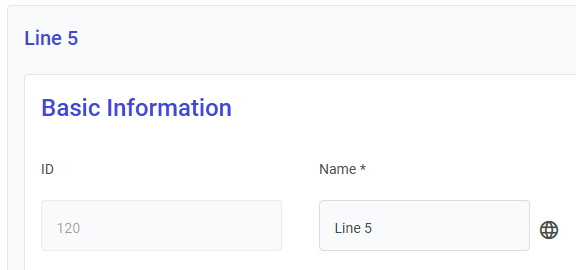
Throughout the app, you’ll see a **globe icon** next to entities. Click on this icon to add or edit the translation for that specific entity.
### **Setting Up Multiple Translations**
To set up translations for multiple entities at once, follow these steps:
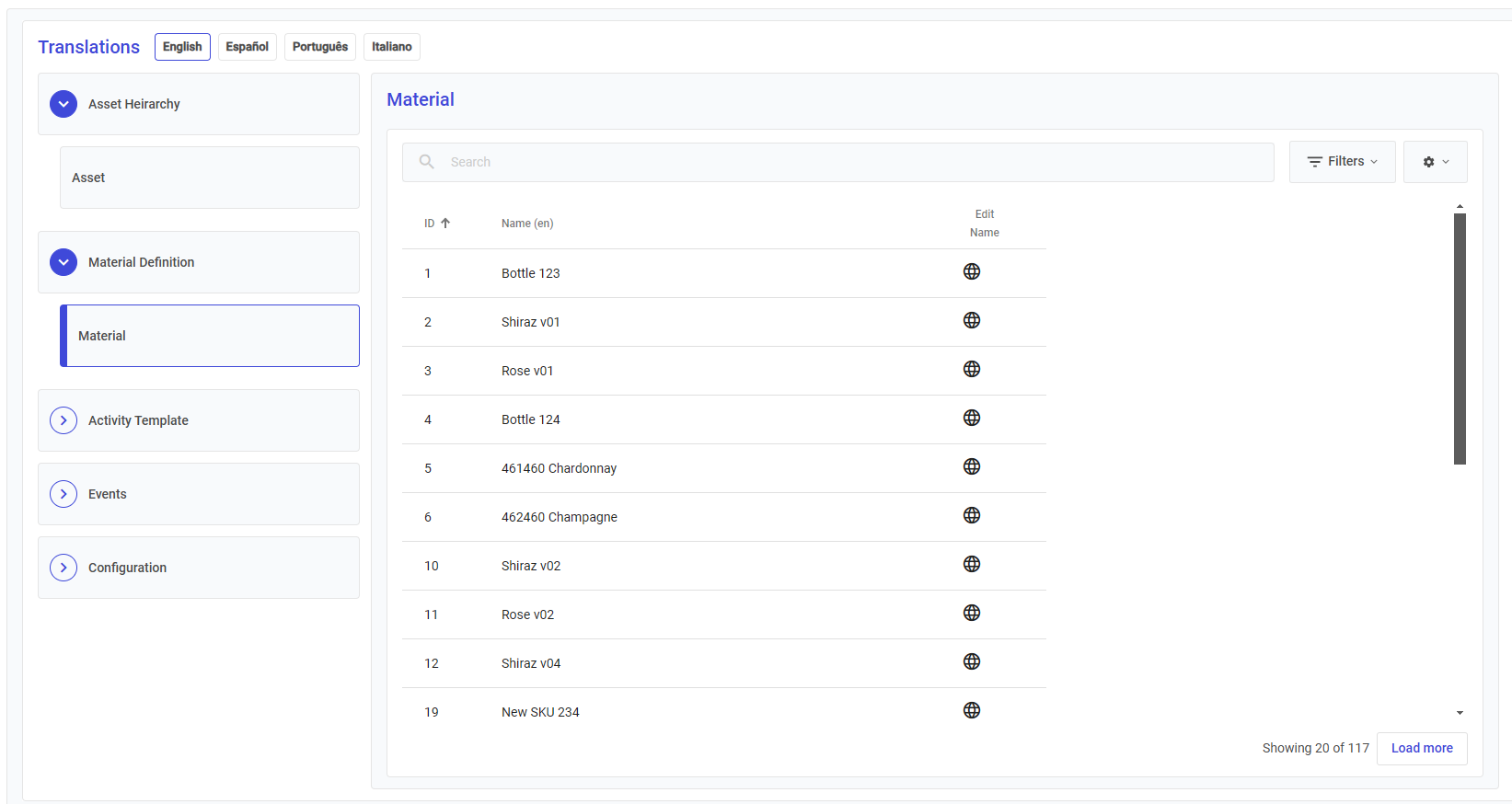
Navigate to **Settings**. Click on **Translation**. You will see a hierarchical interface listing the available entity types for translation, such as:
* Asset Hierarchy
* Material Definition
* Activity Templates
* Events
* Configuration entities
\
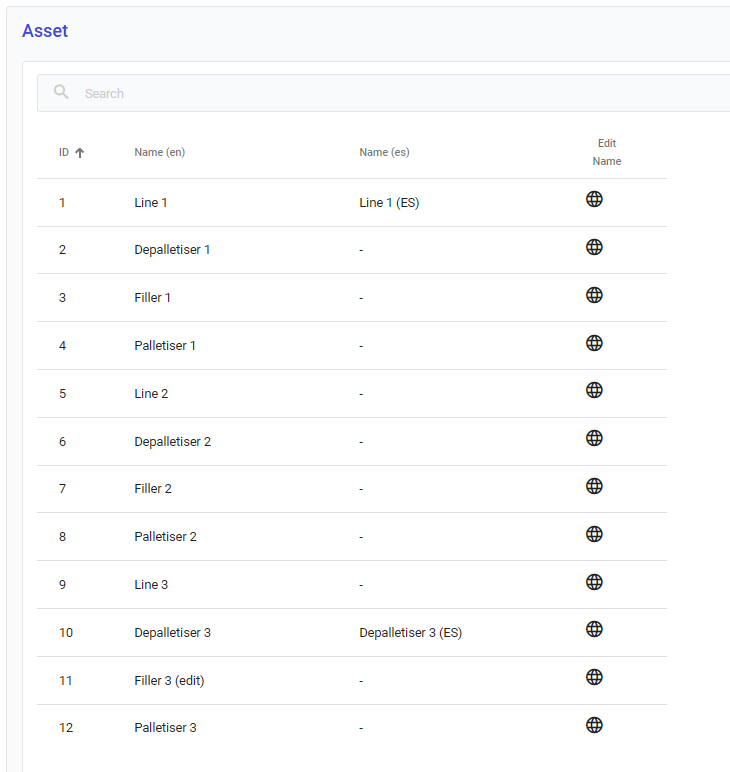
At the top left, there’s a list of available languages. Select the ones you want to display as columns in the translation table.
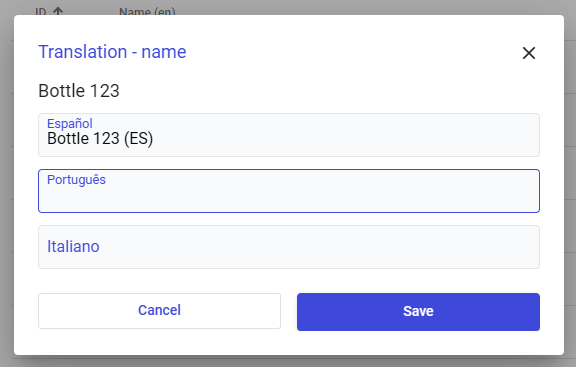
To edit the translations, click on any category (e.g., Asset Hierarchy, Material Definition). For each entity, click on the **globe icon** to edit its name.
Enter your desired translation in the provided fields. Once you've entered the translations, click **Save** to apply them.