> For the complete documentation index, see [llms.txt](https://help.tillit.cloud/tillit/llms.txt). Markdown versions of documentation pages are available by appending `.md` to page URLs; this page is available as [Markdown](https://help.tillit.cloud/tillit/knowledge-base/setting-up-tillit/configuration/run-rate-template.md).
# Run Rate Template
### Overview
The Run Rate template is a way to automate run rates when running an order without having to set individual run rate on assets, materials or orders.
### Navigation
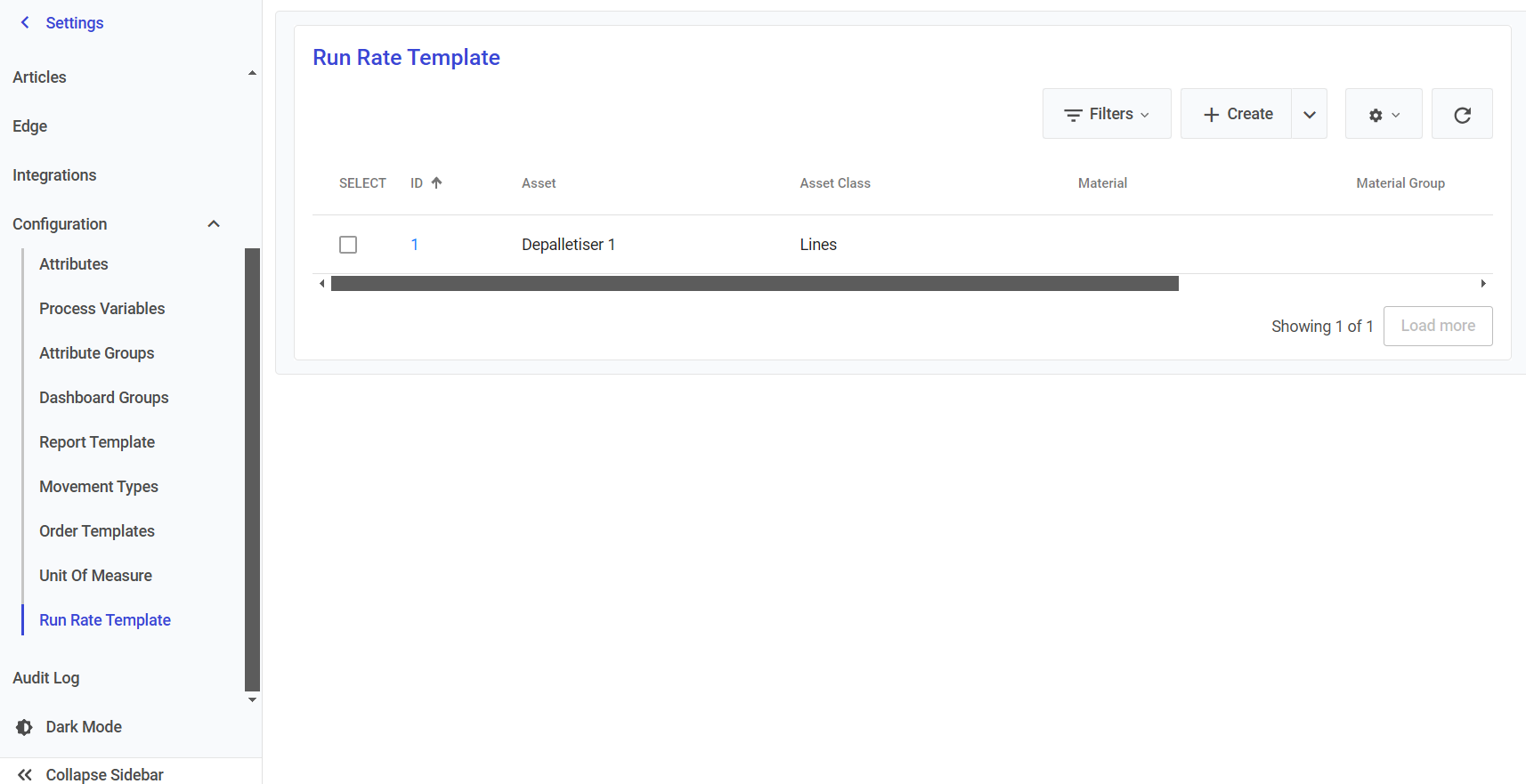
Go to **Settings > Configuration > Run Rate Template.**
### Creating a Run Rate template
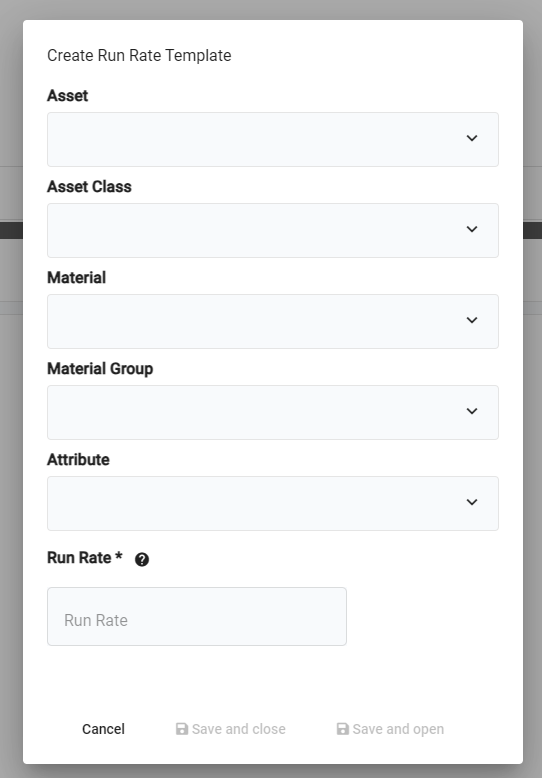
Click on **Create** to start filling in information.
Any information that you put in the Asset, Asset Class, Material, Material Group and Attribute will be seen as a specific combination that will have the Run Rate that you put below. All of the fields will be treated as a requirement when an order is created
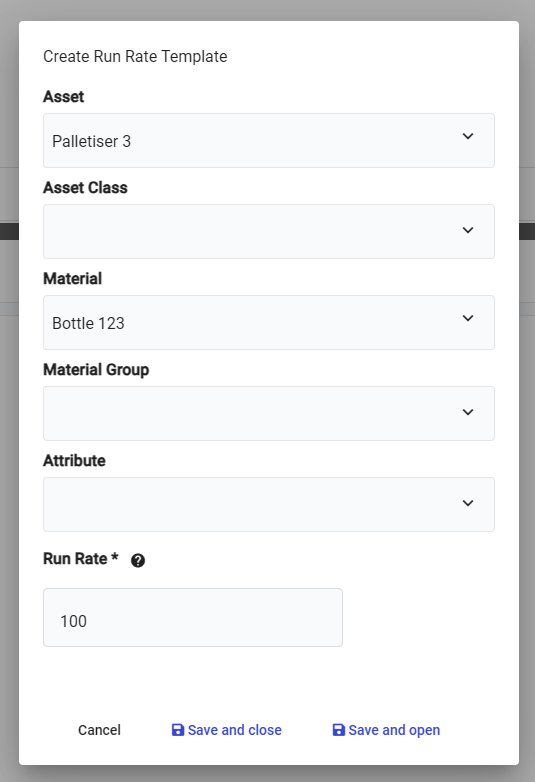
For example, if you have a configuration as below:
Then any order that satisfies **all** of these requirements:
* Runs on **Palletiser 3**
* Producing material **Bottle 123**
Will have a run rate of 100.
{% hint style="info" %}
If your material has the UOM x and an order is loaded at UOM y, then the run rate should be converted automatically.
If the asset has a UOM set, then it will be used. However if not set, then it will convert to the produced material’s UOM.
{% endhint %}
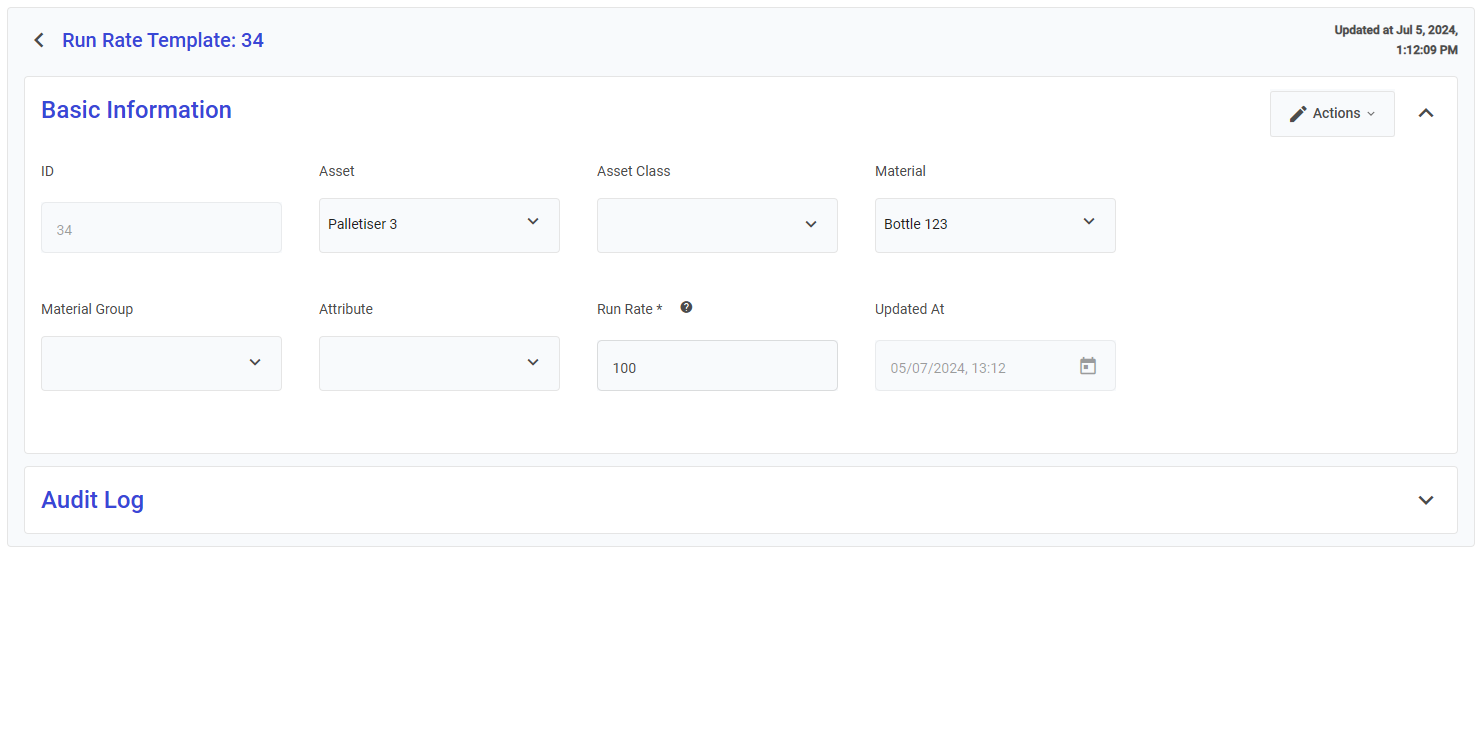
Then click on either **Save and close** to close the modal or **Save and open** to view and edit additional information.